
Fire Rated Doors (FRD)
Certified Fire Resistance • Life Safety • Code-Compliant Door Systems
Fire Rated Doors (FRD) are engineered safety systems designed to contain fire, heat, and smoke for a defined duration, protecting lives, evacuation routes, and building assets during emergencies. Unlike conventional doors, FRD doors function as a fire exit door system, forming a critical part of passive fire protection in modern construction.
As a Fire Rated Door Supplier, these solutions are used across residential and commercial structures where fire rated doors for buildings are mandatory. Each unit is fire rated door installation ready, ensuring seamless integration into approved fire safety layouts.
What Are Fire Rated Doors (FRD)?
Fire Rated Doors are certified fire resistant door assemblies tested under controlled conditions to withstand fire exposure for a specific time while maintaining structural integrity and smoke containment.
This is not a standard door product.
This is a life-safety door system.
FRD doors help prevent the spread of fire between compartments, reduce smoke migration, and provide critical evacuation time during emergencies.
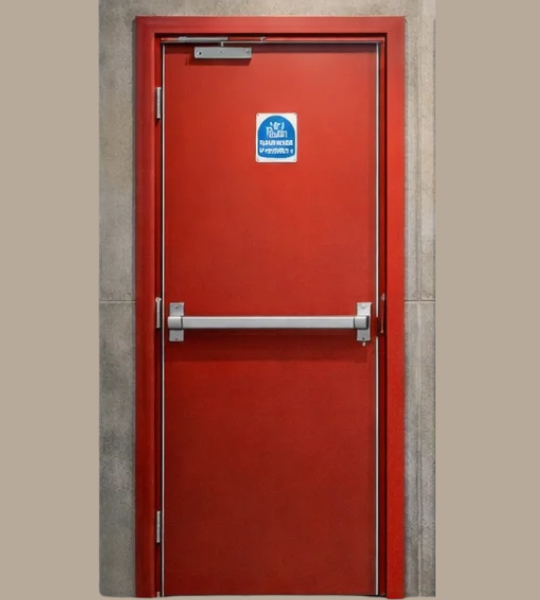
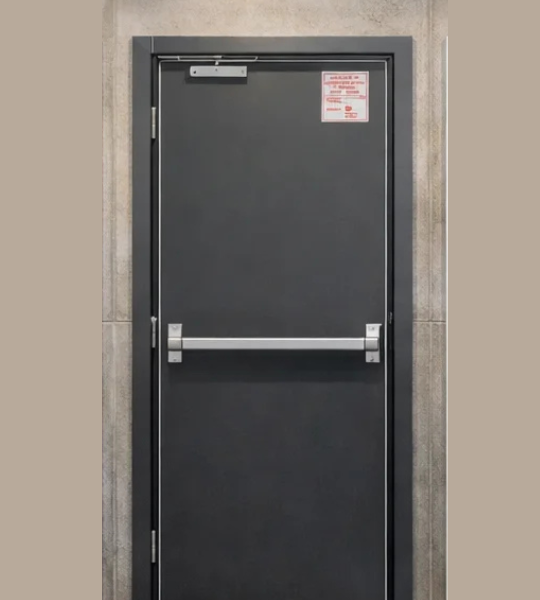
Types of Fire Rated Doors Based on Fire Rating
Fire Rated Doors are classified based on the duration they can resist fire:
Used in internal compartments and low-risk zones where limited fire resistance is required.
Commonly installed in corridors, service rooms, and controlled access areas.
Required in staircases, electrical rooms, DG rooms, and medium-risk areas.
Installed in high-risk zones such as basements, parking areas, and high-rise fire exits where maximum containment is critical.
Each variant is tested as a complete fire rated door assembly.
Fire Rated Door Construction & Materials
Fire Rated Doors are manufactured using materials engineered to perform under extreme heat:
Steel or GI fire rated door skins
Fire resistant insulated core
Smoke control fire door sealing systems
Reinforced frames for structural stability
High-temperature resistant coatings
This construction ensures integrity, insulation, and controlled performance during fire exposure.
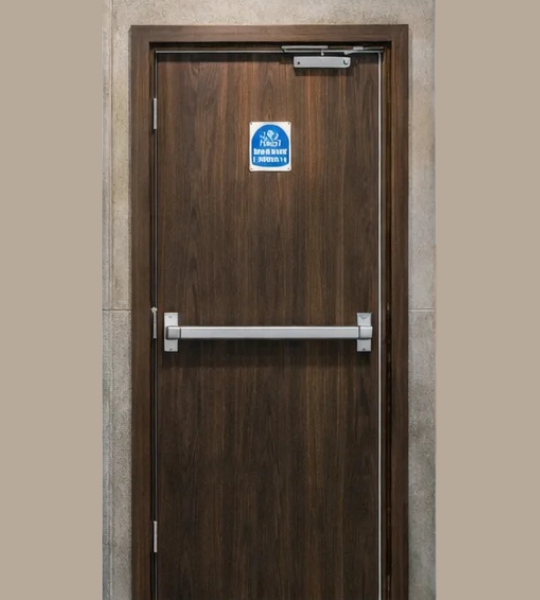
Where Fire Rated Doors Are Mandatory
Fire Rated Doors are required in the following areas:
Fire rated doors for staircases and fire exits
Fire doors for electrical rooms and DG rooms
Fire rated doors for basements and parking areas
Fire doors for commercial buildings and IT parks
Fire rated doors for hospitals, hotels, and malls
Fire doors for high-rise residential buildings
No FRD doors = No Fire NOC = No Occupancy Certificate.
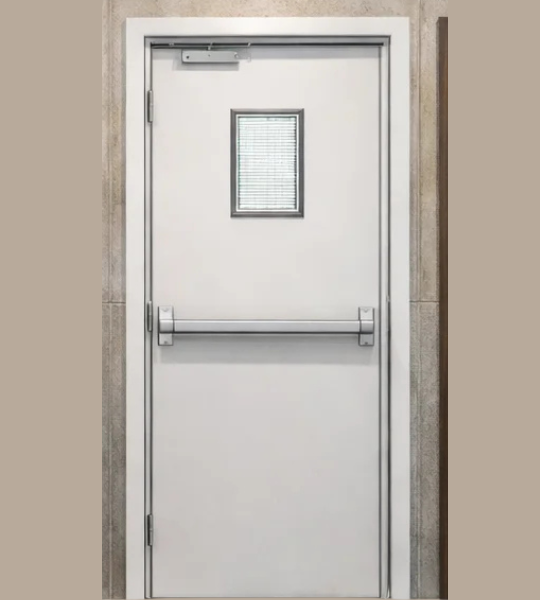
Key Features of Fire Rated Doors
Certified fire and smoke containment
High-temperature resistance under test conditions
Self-closing mechanism compatibility
Structural stability during emergencies
Performance as a code-compliant fire door
In fire safety, appearance is secondary. Performance is everything.
Fire Rated Door Hardware & Accessories
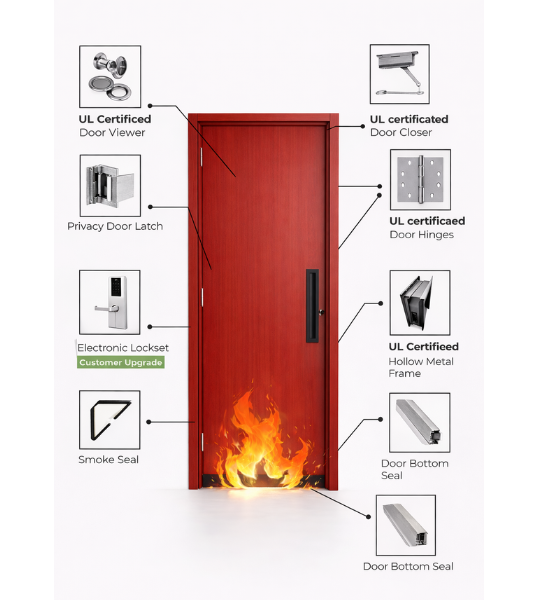
A Fire Rated Door is effective only when installed with compliant hardware:
Fire rated door with panic bar for emergency exits
Fire rated door with door closer for automatic closure
Fire rated door with smoke seal for compartment isolation
Fire rated hinges tested for heat resistance
Fire rated doors with vision panel using approved fire glass
Hardware compatibility is essential for audit approval and real-world performance.
Fire Rated Door Compliance & Certification
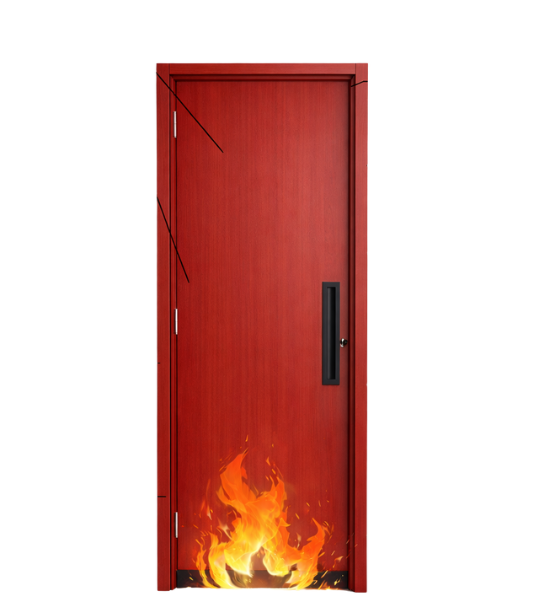
Fire Rated Doors are tested and evaluated under recognized fire safety standards such as:
IS standard fire door testing
Code-compliant fire door performance
Certified fire resistance documentation
Acceptance during fire audits and inspections
Proper certification ensures approval during Fire NOC, OC, and insurance audits.
Fire Rated Door Sizes & Configurations
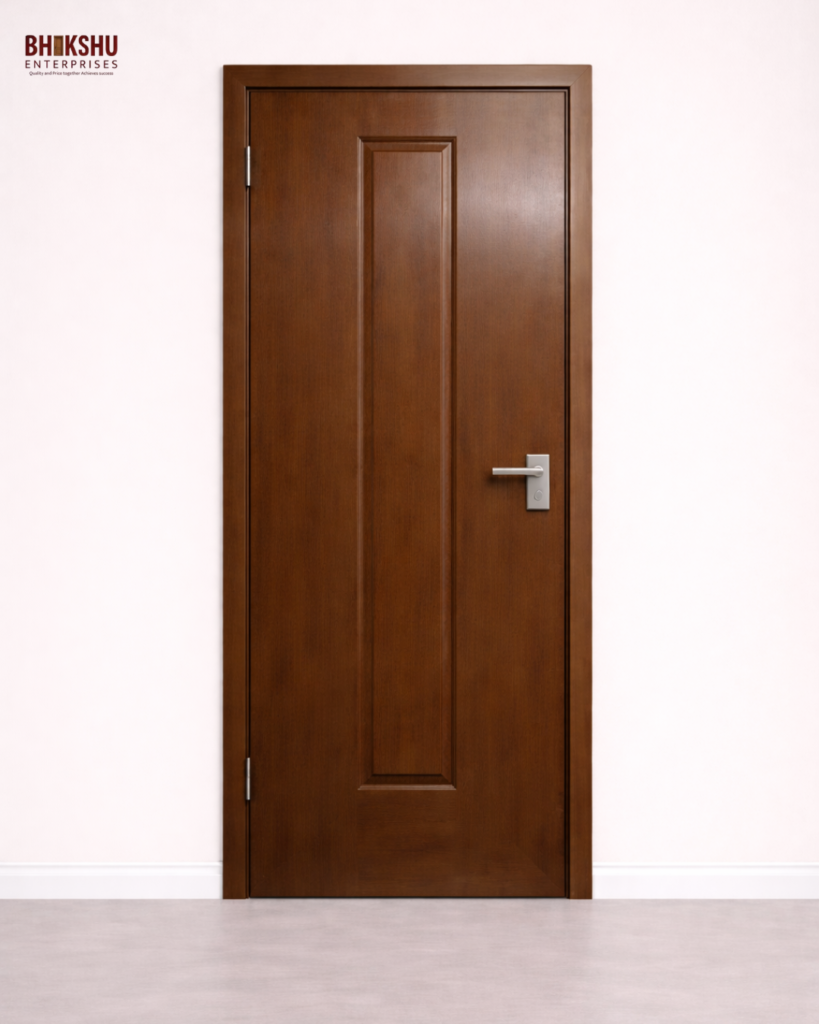
Available configurations include:
Standard size fire doors
Custom size fire rated doors
Single leaf fire doors
Double leaf fire doors
Ready-to-install fire doors for project timelines
Selection depends on fire load, evacuation design, and structural layout.
Why Fire Rated Doors Are a Safety Requirement
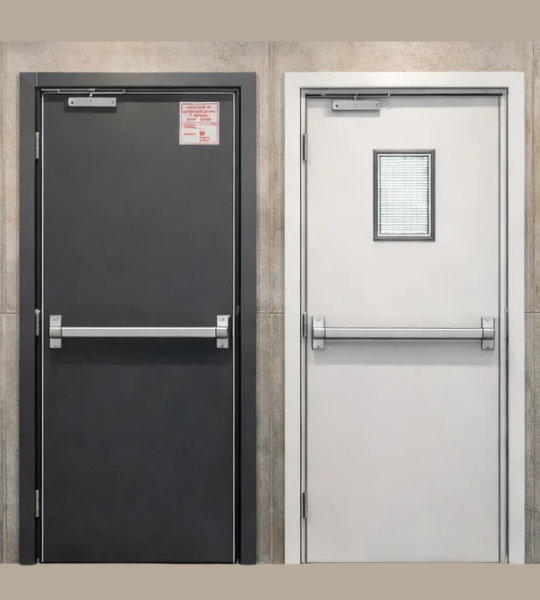
Installing Fire Rated Doors:
- Supports Fire NOC and OC approvals
- Reduces legal and insurance risks
- Protects occupants during evacuation
- Limits fire spread and smoke damage
- Meets statutory fire safety requirements
Fire Rated Doors are not optional—they are mandatory safety infrastructure.
Request Manufacturing Consultation
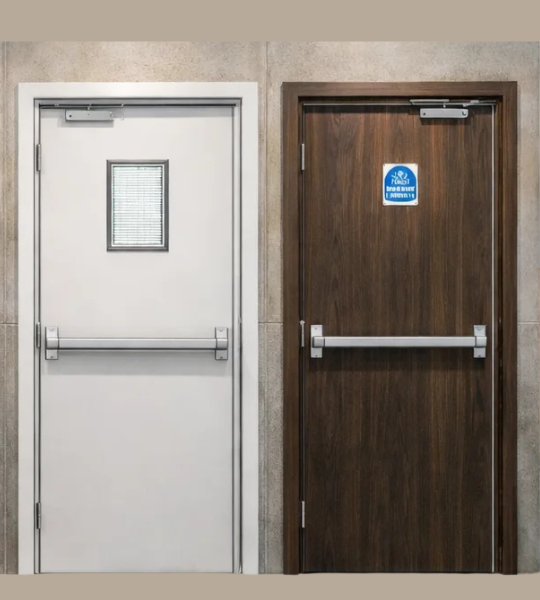
Choose the Right Fire Exit Door System
Selecting the correct Fire Exit Door System depends on building type, risk category, and compliance needs. Fire Rated Doors must be specified, installed, and maintained as tested systems to perform effectively during emergencies.
Request Fire Rated Door Specifications for Your Building
Frequently Asked Questions – Fire Rated Doors (FRD)
Fire Rated Doors (FRD) are certified fire containment door systems designed to restrict fire and smoke spread for a specified duration. These doors are mandatory in staircases, fire exits, basements, electrical rooms, and corridors of commercial and residential buildings to ensure safe evacuation and compliance.
Yes. We operate as a Fire Rated Door Supplier providing factory-manufactured doors for builders, contractors, hospitals, hotels, IT parks, and high-rise developments. Our supply includes complete tested assemblies ready for site deployment.
Our Fire Rated Door for Buildings range includes 30-minute, 60-minute, 90-minute, and 120-minute fire resistance options. Each fire rating is selected based on building risk zones, fire authority guidelines, and statutory requirements.
Yes. Our doors are designed as a complete Fire Exit Door System, compatible with panic bars, door closers, smoke seals, and fire-rated hinges. This ensures controlled evacuation, smoke containment, and operational reliability during emergencies.
Absolutely. Every unit is supplied as Fire Rated Door Installation Ready, meaning the door leaf, frame, vision panel (if required), and fire-rated hardware are pre-engineered for fast and error-free site installation.
Yes. Fire Rated Doors (FRD) are available in both standard and custom sizes, including single-leaf and double-leaf configurations. Customization ensures structural compatibility without compromising fire performance or certification validity.